
The Story
Once, Rhinebeck was known for violets.
A forgotten floral history, an old farmhouse, and a Hudson Valley life in bloom.
Rhinebeck Violet
Before Rhinebeck became known for country houses, weekend escapes, antique shops, gardens, and Hudson Valley charm, it was known for something smaller, more delicate, and almost forgotten: violets.
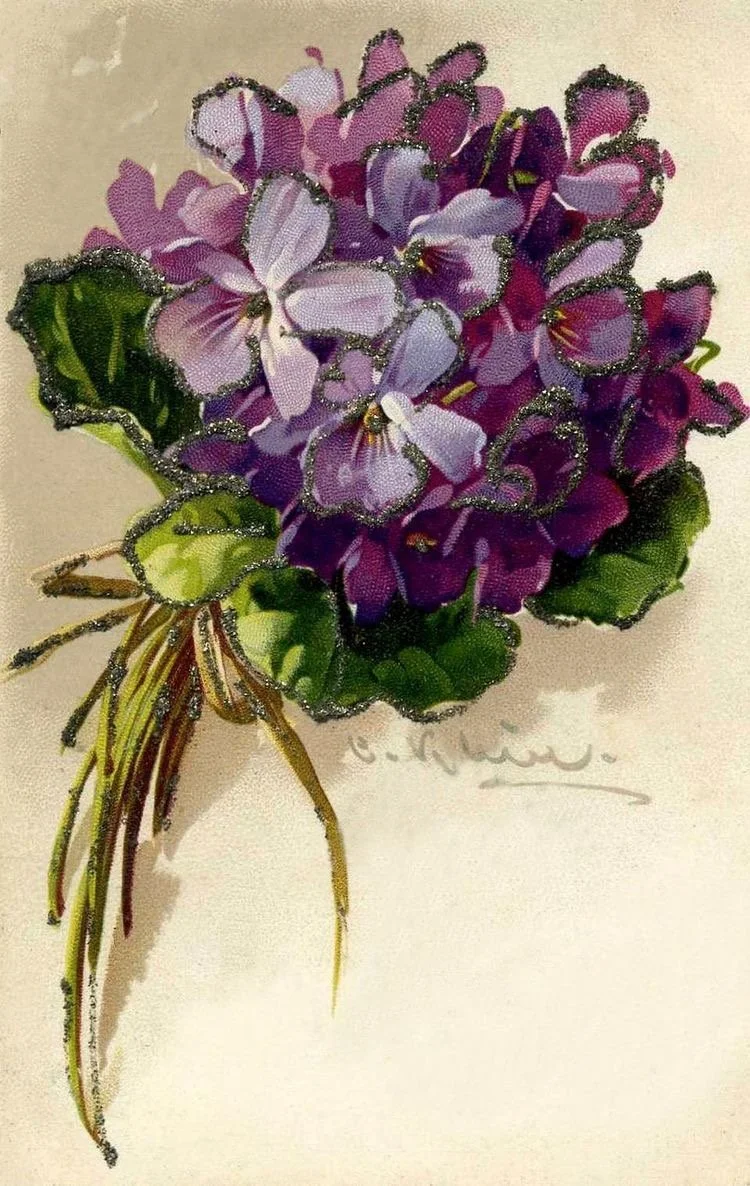
In the late nineteenth and early twentieth centuries, violet growing became one of the region’s remarkable floral industries. Glass greenhouses once covered parts of Rhinebeck and Dutchess County, producing blossoms that traveled far beyond the village.
The flower at the center of the story was modest in size but rich in cultural presence. Violets were worn, gifted, gathered, grown, sold, and celebrated. They belonged to corsages, flower shops, railway shipments, greenhouses, and the hands of growers who helped give Rhinebeck a floral identity few remember today.
The remnants of that era are still said to live in the soil.
In some Rhinebeck gardens, broken pieces of old greenhouse glass surface like fragments from another time—quiet traces of what was once called the Crystal City.
Rhinebeck Violet was created to bring this story back into view. Not as nostalgia alone, but as inspiration: a way to remember the beauty of place, to honor the flowers and histories that shape a landscape, and to let an almost-forgotten story bloom again.
The Farmhouse
Our own connection to the story began with an old house.
Years ago, Melisca and her sister Dana found an old farmhouse in Rhinebeck that had fallen into disrepair. The gardens were overgrown, the house needed care, and much of the land had been left to time.
They began slowly, repairing what they could and beginning the long process of bringing the property back to life. Peony gardens were restored, bulbs were planted, and neighboring sheep were invited to graze the fields. Inside, floors were sanded and stained, rooms were gradually renewed, and the house began to settle into a new rhythm. .
It remains a work in progress. Old houses always are. That is part of their beauty: they ask to be lived with, listened to, and cared for over time.This ongoing relationship with the house and gardens shaped the sensibility behind Rhinebeck Violet—an approach to design rooted in memory, nature, and the character of place.
The SpiritHouse
High among the trees, another kind of retreat took shape.
Designed and built by Pete Nelson and featured on Animal Planet’s Treehouse Masters, the SpiritHouse brought an unexpected sense of wonder to the property.
Set within the canopy, it became a place apart—part shelter, part lookout, and part invitation to see the landscape differently. Its presence reflects the same spirit that shaped the house and gardens: imagination, close attention to place, and the belief that beauty can still surprise us.
That spirit continues to inform Rhinebeck Violet.
Today
Rhinebeck Violet is a place-based botanical design studio and lifestyle brand inspired by the lost violet fields of Rhinebeck, the beauty of old houses, and a Hudson Valley life in bloom.
Violets and violas remain at the heart of the story. Around them gather the flowers, materials, and rituals of country life: roses, peonies, lilacs, hydrangeas, linen, china, handwritten notes, garden tables, books, and rooms shaped by the seasons.
Through hospitality and interior design, Rhinebeck Violet translates this world into memorable environments for inns, spas, retreats, guest suites, and private houses. Botanical art, local history, books, objects, textiles, correspondence, and sensory detail come together to create places that feel distinctive, restorative, and deeply connected to their surroundings.
The Violet Letter and our growing collection of garden-inspired objects extend that experience beyond the room, offering a tangible way to enter the world of Rhinebeck Violet and carry a sense of place home.
This is not a museum, and it is more than a shop. It is a living design practice shaped by beauty, memory, nature, and place.
Further Reading
Sources & historical notes
The Poughkeepsie Journal
On William Saltford, George Saltford, and Rhinebeck’s history as the Violet Capital of the World.
Read ArticleChronogram
On the documentary Sweet Violets by filmmaker Tobe Carey and Rhinebeck’s violet-growing era.
Read ArticleHudson Valley Magazine
On the greenhouse glass still found in Rhinebeck soil and the forgotten violet industry of the Hudson Valley.
Read Article